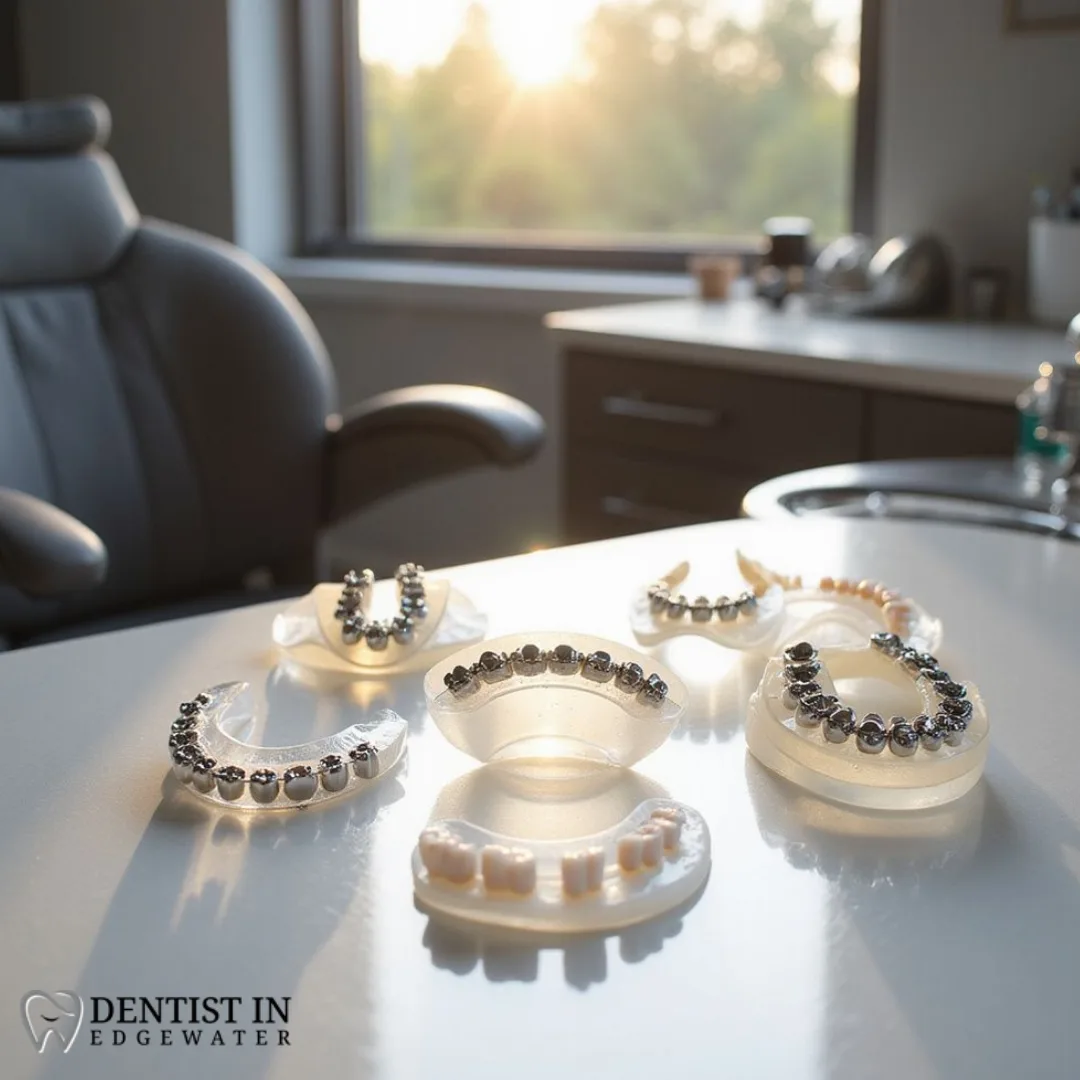
Many people hide their smiles. They worry about crooked teeth and pain when they chew. Braces can fix alignment and ease bite problems. This helps with chewing, speaking, and confidence.
Metal braces use stainless steel bands, brackets, and wires to move teeth gently over time. An orthodontist bonds the brackets to the teeth and tightens the wires to guide movement.
Many people choose braces to fix crooked teeth and improve their smiles. Different types of dental braces offer unique features for better teeth alignment.
Orthodontists often recommend metal braces for strong, predictable teeth alignment. A dentist bonds stainless steel bands, brackets and wires to teeth. These high-grade stainless steel parts apply steady pressure to move teeth and correct malocclusion.
Metal braces remain the oldest and most common dental braces option. Their popularity shows among children and adolescent patients. Patients who compare braces types and how they straighten your teeth also consider ceramic braces, clear aligners like Invisalign, and the role of retainers for long-term oral health.
Ceramic braces offer a more discreet option for teeth straightening. They use tooth-colored brackets that blend in with the natural color of teeth, making them less noticeable than metal braces.
Patients often prefer ceramic braces for their aesthetic appeal, especially adults and teens who may feel self-conscious about traditional options.
These braces work similarly to metal ones. An orthodontist bonds the ceramic brackets to the teeth and connects them with wires. Ceramic braces apply gentle pressure on teeth to gradually shift them into proper alignment.
While they can be slightly more fragile than metal alternatives, many patients appreciate their effectiveness without drawing attention to their orthodontic treatment.
Lingual braces sit on the back of the teeth. They offer a hidden way to straighten smiles. These braces use metal brackets and wires, similar to traditional ones. Patients enjoy their discreet appearance since no one can see them while smiling or talking.
Orthodontists bond these braces directly to the teeth's inner surfaces. Lingual braces apply gentle pressure on teeth, guiding them into proper alignment over time. This type is an excellent option for individuals concerned about aesthetics during treatment. The next section will explore how braces work in the process of straightening teeth.
Clear aligners offer a modern approach to teeth alignment. These invisible trays fit snugly over the teeth. They apply gentle pressure to shift the teeth into their proper positions. Patients can remove clear aligners when eating or brushing, making them convenient for daily life.
Each set of aligners typically works for about two weeks before patients switch to the next set. This process gradually moves the teeth closer together, helping correct malocclusion issues.
Invisalign is one popular brand of clear aligners that many people choose for its effectiveness and discretion. Clear aligners provide an alternative to traditional metal braces while still achieving optimal oral health outcomes.
Braces gradually shift teeth into their proper positions through gentle pressure. Orthodontists thoughtfully plan each step of the process to ensure optimal results. They adjust brackets and wires during regular visits, so the teeth move steadily over time. This journey enhances smiles and also improves oral health.
Metal braces consist of stainless steel bands, brackets, and wires. Dentists or orthodontists apply them by bonding the brackets to the teeth. Traditional braces use a combination of these elements to straighten teeth over time. Brackets hold metal wires in place and provide anchorage for moving teeth.
These components work together to apply pressure on the teeth. This gentle force gradually shifts them into proper alignment. They are especially popular among children and adolescents due to their effectiveness as well as affordability compared to other options like ceramic braces or clear aligners.
Braces straighten teeth through careful pressure applied over time. This process involves several phases of gradual tooth movement.
The main types of braces include metal braces, ceramic braces, lingual braces, and clear aligners. Each type has its own features and benefits for straightening teeth.
Metal braces use brackets attached to each tooth. A wire connects these brackets. The pressure from the wire gradually moves teeth into their correct positions over time.
Yes, ceramic braces function like metal ones but use clear or tooth-colored materials. They provide a more discreet option while still effectively aligning your teeth.
Clear aligners are custom-made trays that fit over your teeth. They apply gentle pressure to shift your teeth into place without using traditional brackets and wires.
Tell us a little about what you need — we'll be in touch shortly.
15 Lee Airpark Dr #100, Edgewater, MD 21037,United States

Hi! I'm Tooth fairy! Your AI Assistant Ask me anything