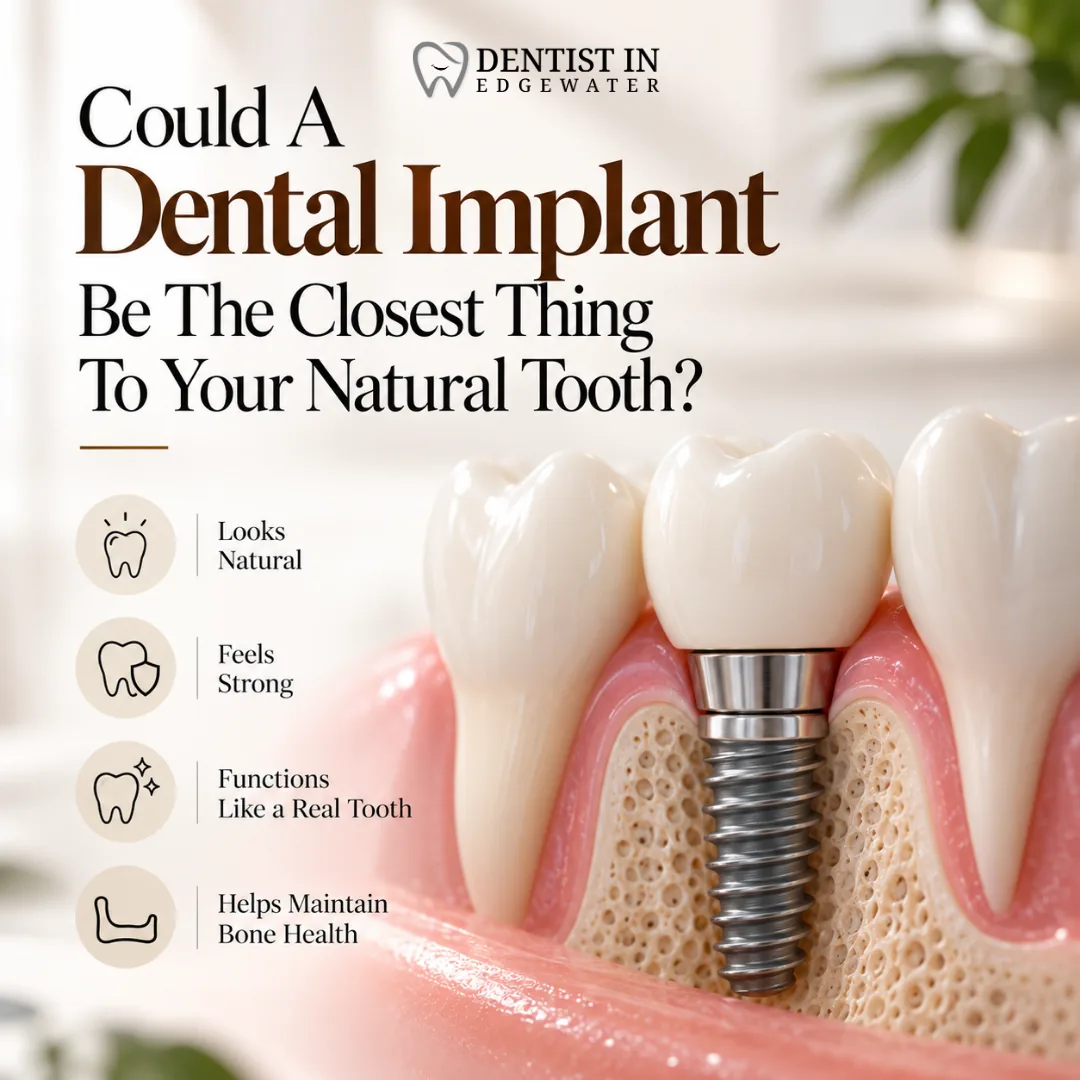
Many people lose a tooth and then worry about chewing, speaking, or smiling. They want a replacement that looks and feels like a real tooth. Dental Implants often come up as a top option.
Dental implants anchor directly into the jawbone, giving stability like a natural tooth root. Here you will know how implants match natural teeth in shape, function, the benefits, who makes a good candidate, and what to expect from the procedure and recovery.
Dental implants copy the way a real tooth sits in the jaw. Their design helps them feel and work almost like natural teeth, making daily use easy and comfortable.
Implants anchor directly into the jawbone. This creates stability similar to a natural tooth root. A healthy jawbone helps them function as optimally as natural teeth. They serve as a permanent solution, unlike removable dentures.
Anchored implants mimic natural roots by being embedded into the jawbone, which gives enhanced stability compared to traditional tooth replacement options. Many implant dentists call them the closest replacement to a natural tooth because they replicate both structural and functional aspects of natural teeth.
A prosthetic crown fits on each implant. Technicians make crowns to match the color, shape, and size of surrounding teeth. The result looks identical to a natural tooth and blends with existing teeth for natural appearance and aesthetics.
This prosthetic restoration restores both form and function without depending on adjacent teeth. Biocompatible materials allow jawbone integration, which preserves jawbone and supports oral health. Implant dentistry uses a surgical procedure and recovery period to create long term durability after tooth loss.
Transitioning from structure and functionality, dental implants impress with their natural appearance and feel. These restorations blend seamlessly with existing teeth. Custom-made to match the color, shape, and size of surrounding teeth, they offer a look that is hard to distinguish from natural ones.
Patients often appreciate how implants restore both form and function. Unlike traditional dentures or bridges, which can shift or feel uncomfortable, implanted crowns provide stability similar to natural tooth roots.
This stability enhances confidence while eating or speaking. Dental implants mimic the structural aspects of real teeth well; thus they maintain oral aesthetics effectively without relying on adjacent teeth for support.
Dental implants offer strong support for those who experience tooth loss. They provide a stable base that mimics the function of natural teeth, contributing to better oral health and improved aesthetic appeal.
Dental implants offer remarkable durability and longevity. They provide a permanent solution to tooth loss, unlike removable dentures that require frequent replacement. These implants integrate directly into the jawbone, creating stability similar to natural tooth roots. This unique feature enhances their strength over time.
Many people appreciate how dental implants mimic the structure and function of natural teeth. The custom-made crowns match the color, shape, and size of surrounding teeth; their appearance blends seamlessly with existing smiles. With proper care, these prosthetics can last for decades, making them an excellent investment in oral health.
Dental implants play a crucial role in preserving jawbone health after tooth loss. They anchor directly into the jawbone, mimicking the function of natural tooth roots. This integration stimulates the bone, preventing its deterioration over time.
Many patients find that having implants helps maintain their facial structure and prevents changes associated with missing teeth.
In contrast to traditional dentures or bridges, which rest on gum tissue, implants provide stability without relying on adjacent teeth for support. Personal experiences indicate that individuals who choose dental implants often enjoy better oral health and fewer complications related to bone loss compared to those using removable options.
The durability of these prosthetics ensures long-term success while promoting general well-being and comfort in daily activities.
People should evaluate their oral health before choosing a dental implant. They also need to understand the procedure and what recovery will be like after surgery.
Dental implants can offer a highly effective solution for tooth loss. Nevertheless, not everyone qualifies for this dental restoration.
Understanding these requirements ensures that individuals make informed decisions about dental restoration options like implants and prepares them for the implant procedure ahead.
The implant procedure involves several steps and a recovery period. Patients must understand what to expect during this process.
A dental implant is a small titanium post placed in the jawbone. It serves as an artificial root for a replacement tooth.
Dental implants can feel and function like natural teeth. They provide stability and support, making them similar to your original tooth.
Yes, dental implants are generally safe when done by qualified professionals. They have a high success rate and can last many years with proper care.
People who have lost teeth due to injury or decay may benefit from dental implants. A dentist can assess if you are a good candidate based on your oral health.
Tell us a little about what you need — we'll be in touch shortly.
15 Lee Airpark Dr #100, Edgewater, MD 21037,United States

Hi! I'm Tooth fairy! Your AI Assistant Ask me anything