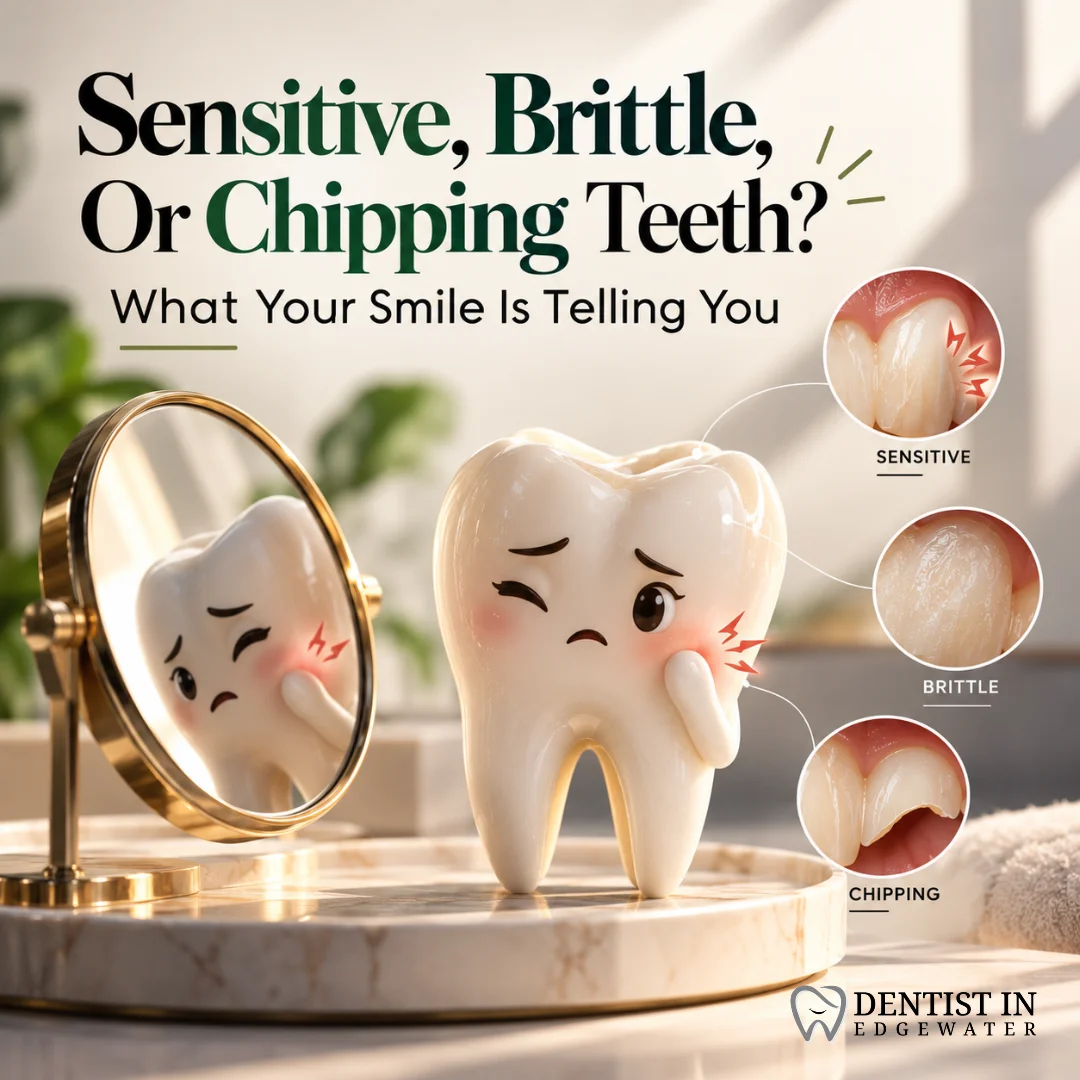
Many people bite down and feel a sharp pain or hear a small click. They worry their teeth will chip or break. They may call that tooth a Weak-tooth and fear it will get worse.
Enamel is very hard, yet it can wear away from grinding, acid, or injury. Here you will know common causes, signs to watch, and simple ways to protect teeth. It also covers treatments like bonding, crowns, and remineralization.
Sensitive, brittle, or chipping teeth can stem from everyday habits and hidden health issues. Various factors lurk behind tooth troubles that many people overlook.
Acid wears tooth enamel over time. Soda, citrus, and stomach acid from reflux attack enamel. Enamel thins and loses shine. People feel sharp teeth sensitivity to hot or cold.
Small chips and fractures follow weakened enamel. A dentist can spot erosion and test for cracked tooth signs. Fluoride gels and remineralization treatments help rebuild tooth enamel. Avoiding acidic drinks and chewing ice reduces dental trauma risk.
Teeth grinding, called bruxism, wears enamel fast. It can cause cracked tooth pain and chipped tooth symptoms. Studies show 8 to 31 percent of adults grind their teeth at some point.
A dentist recalled treating a patient whose front teeth grew thin and sensitive after years of grinding. Tooth sensitivity rose. Chewing pain followed. Gum irritation showed up too.
Night guards stop further damage. A dentist fitted a singer with a custom guard and cut pain in half within two weeks. Dental bonding or crowns can fix fractures and restore chewing.
Dentists link untreated bruxism to fractured teeth and long term dental trauma. Regular dental visits catch the signs early.
Acidic drinks wear down enamel. Sodas, citrus fruits, sports drinks, and wine attack the enamel surface. The acid softens tooth enamel and speeds enamel erosion. That loss shows as tooth sensitivity, chipped tooth symptoms, or fractured teeth.
People should sip water with acidic meals. Using a straw limits direct contact with teeth. Wait 30 to 60 minutes before brushing after acid exposure. Fluoride toothpaste and professional remineralization treatments help strengthen enamel and cut tooth sensitivity. A dentist can spot erosion early and recommend dental treatment like bonding or crowns.
Genetic conditions such as amelogenesis imperfecta can significantly impact tooth health. This condition affects the enamel formation, leading to thin, brittle teeth. Individuals with this disorder may experience increased sensitivity and a higher risk of cavities. Their smiles often show signs of discoloration or unusual shapes due to the deficient enamel.
The lack of strong enamel makes teeth more vulnerable to chipping and damage. People with amelogenesis imperfecta might find they need more dental care over time. Regular check-ups and treatments help maintain oral health for those facing these genetic challenges.
Teeth can send clear signals when they’re in trouble. Discoloration or strange spots often indicate issues brewing beneath the surface. Increased sensitivity to hot or cold drinks might hint at underlying damage too.
Discoloration or spots on teeth can signal trouble. Stains often come from food, drinks, and smoking. A person might notice brown or yellow patches that detract from their smile. In many cases, these changes hint at enamel erosion.
When the protective layer wears away, it exposes the underlying dentin. This leads to sensitivity and further discoloration.
Sometimes dental trauma causes these spots as well. When a tooth chips or fractures, it may not heal perfectly, leaving marks behind. Individuals should keep an eye out for these signs; they could mean more than just cosmetic issues. Seeking advice from a dentist ensures better oral health and addresses any underlying problems early on.
Discoloration can signal more than just a cosmetic issue. Increased sensitivity to hot or cold often accompanies this problem. Many people feel sharp pain when sipping hot coffee or eating ice cream. This sensitivity suggests that the tooth enamel may have thinned, exposing vulnerable areas.
The discomfort might indicate other underlying issues like gum disease or cavities. A cracked tooth could also contribute to this heightened sensitivity. Awareness of these symptoms can lead to better dental care and improved oral health overall.
To keep teeth strong and healthy, practice good oral hygiene regularly. Brush twice a day and floss daily to remove plaque. Additionally, fluoride products can significantly help strengthen enamel.
Eating a balanced diet will also play a key role in dental health. Take charge of your smile today by learning more about how to protect those pearly whites!
Good oral hygiene can keep sensitive, brittle, or chipping teeth at bay. Taking care of your teeth helps maintain a bright smile and prevents dental troubles.
Embracing these proper oral hygiene practices will strengthen smiles and combat common issues like tooth sensitivity and fractures effectively!
Fluoride-based products can be a game changer for oral health. These items help strengthen tooth enamel and prevent cavities. For those struggling with sensitive, brittle, or chipping teeth, fluoride might just be the hero they need.
Using toothpaste or mouth rinses that contain fluoride adds a protective layer to vulnerable teeth. It fights off harmful bacteria and acids from food.
Many dental experts recommend incorporating fluoride into daily routines for lasting benefits. Regular use of these products can lead to healthier smiles over time, making them a valuable addition to oral care strategies. After addressing the role of fluoride in strengthening teeth, it’s crucial to explore treatment options for weakened teeth next.
Treatment options for weakened teeth include dental bonding, crowns, or veneers. These methods help restore strength and function to damaged smiles. Some people even explore remineralization treatments to boost their enamel health.
Dental bonding helps repair chipped, cracked, or decayed teeth. A dentist applies a tooth-colored resin to the targeted area and shapes it to match the natural tooth. This technique quickly restores a smile’s appearance and function.
Patients who have undergone dental bonding often rave about its effectiveness. The treatment usually takes under an hour, making it convenient for busy schedules. Many notice an immediate improvement in both aesthetics and comfort after just one visit to their dental care provider.
Crowns offer a solid solution for damaged teeth. They cover and protect the entire tooth structure. This treatment restores both strength and appearance. Many people choose crowns to fix cracked or severely decayed teeth. A dentist places these custom-made caps over the existing tooth.
Veneers serve a different purpose; they focus on aesthetics. These thin shells fit over the front surface of teeth, masking imperfections like discoloration or chips. Patients often opt for veneers to achieve that Hollywood smile without needing extensive dental work.
Each option presents unique benefits, so individuals should discuss what suits them best with their dentist.
Remineralization treatments can help restore weakened teeth. These therapies focus on replenishing lost minerals in the enamel. Many dentists recommend fluoride treatments for their effectiveness. Fluoride strengthens and protects teeth from decay, making it a popular choice.
Patients often notice improved sensitivity after these treatments. For example, Sarah received a fluoride varnish at her dentist's office after experiencing tooth sensitivity. Within weeks, she felt less discomfort when drinking cold beverages.
Some options include prescription toothpaste and specialized mouth rinses that promote remineralization efforts. Regular check-ups with a dentist ensure proper monitoring of dental health through these processes. By maintaining good habits, individuals can significantly improve their oral health over time, keeping sensitive or brittle teeth at bay.
To keep teeth strong, people should cut back on acidic foods and drinks. Chewing ice and other hard objects can also lead to cracks, so it's best to avoid those habits.
Acidic foods and drinks can wreak havoc on teeth. Citrus fruits, soda, and wine all contribute to enamel erosion. This makes teeth sensitive and brittle. A friend once discovered this the hard way after sipping lemonade daily, only to find that her smile began to fade.
Cutting back on these items protects tooth enamel. Start swapping out sodas for water or herbal tea. Eating cheese can also help neutralize acids in the mouth. Making simple changes today keeps dental problems at bay tomorrow.
Limiting acidic foods and drinks helps protect teeth. Avoiding habits like chewing ice also plays a crucial role in maintaining oral health. Chewing ice can lead to cracked or chipped teeth, causing sensitivity and pain. This behavior may seem harmless, but it can damage tooth enamel over time.
People often overlook the harm that chewing on hard substances does. It may feel refreshing to munch on ice during hot days; however, this habit can worsen issues such as dental trauma or fractures. Making simple changes can prevent future discomfort and keep smiles bright and healthy.
Sensitive teeth can result from worn enamel, exposed roots, or cavities. Hot and cold foods may trigger pain. If your smile feels like it's on fire after a sip of ice water, it’s time to see a dentist.
Brittle teeth often come from poor dental care or habits like grinding. A lack of essential nutrients also plays a role. When your smile feels fragile, it might be crying out for attention.
Chipping usually signals underlying issues such as tooth decay or trauma. It can happen due to biting hard objects or grinding at night too often. Your smile is telling you something needs fixing.
Tooth sensitivity and brittleness can be improved with good oral hygiene practices; brushing gently helps preserve enamel while regular check-ups catch problems early on. Eating a balanced diet strengthens your smile from the inside out too!
Tell us a little about what you need — we'll be in touch shortly.
15 Lee Airpark Dr #100, Edgewater, MD 21037,United States
Hi! I'm Tooth fairy! Your AI Assistant Ask me anything