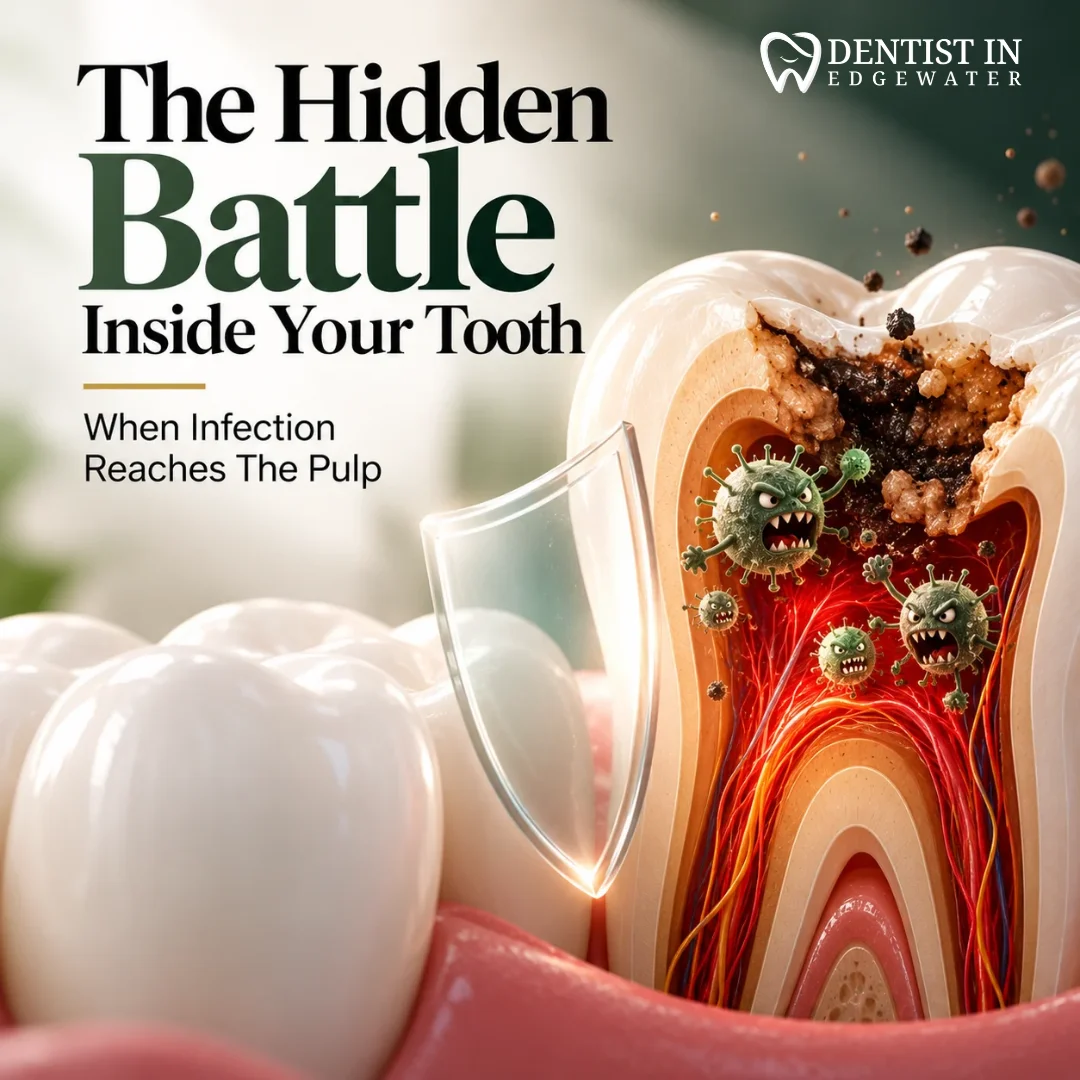
A dull or sharp toothache can shake anyone up. Many people feel pain when biting, or get sudden spikes from hot or cold drinks. This often points to a deeper problem, where bacteria reach the tooth pulp and cause infection.
One fact stands out, a tooth with infected pulp can lead to an abscess that spreads beyond the tooth.
Here you will know about the hidden battle inside a tooth pulp gets inflamed. It will describe symptoms, and how Root Canal Treatment removes the infected tissue, stops pain, and saves the tooth.
When infection reaches the pulp, it causes inflammation and pain. Bacteria can spread beyond the tooth, leading to more serious issues if left untreated.
Bacteria often creep into the tooth through caries or gum disease and reach the tooth pulp. The pulp sits in a tight space. It swells and hits nerves. Pain comes on and wakes people at night.
A dentist who treated a college student with severe pain said the pulp looked inflamed and full of pus, so the patient needed quick pain management and a root canal.
Inflamed pulp can turn into a full infection if left alone. The infection can form an abscess at the tooth root. It can also move into nearby bone and soft tissue. An endodontist once reported a case where delayed care led to facial swelling and antibiotics.
Infected tooth pulp can act like a highway for germs. The infection reaches the root tip and moves into the jaw bone. It can sit there and eat away at bone. The process often follows untreated tooth decay or deep caries.
Gum disease can speed the spread. The body fights back and forms an abscess. That pocket of pus causes sharp pain and swelling. Endodontics, like a root canal, targets this route. Good pain management helps patients cope during treatment.
Germs can also slip into nearby tissues and cause cellulitis. The face or neck may swell and feel hot. In rare cases the infection enters the bloodstream and threatens general health.
Dentists watch for fever, rising pain, or spreading redness. Quick action preserves oral health and stops larger problems. A root canal saves the tooth and removes the infected pulp.
Tooth pulp infections scream for attention. They often bring persistent pain that makes it hard to focus on anything else. It doesn’t stop there; sensitivity to hot or cold can make even a sip of coffee feel like torture. In some cases, swelling shows up, signaling an abscess may be forming.
A constant, gnawing ache often signals that the tooth pulp suffers from a dental infection. Pain can spike at night, pulse with the heartbeat, or spread to the ear or jaw. A patient reported pain that lasted more than 48 hours and woke her every night, so she sought endodontics care the next day.
Such persistent tooth pain can follow untreated caries or advanced gum disease and may lead to an abscess.
Clinicians treat this pain as urgent and check for swelling, fever, and sensitivity to hot and cold. A clear diagnosis guides pain management and decisions about a root canal or extraction.
One dentist noted that early action cut recovery time from weeks to days in many cases.
Sensitivity to hot and cold often signals a problem deep within the tooth. This discomfort occurs when bacteria invade the pulp, causing inflammation. A simple sip of hot coffee or a bite of ice cream can trigger sharp pain.
This sensitivity can come and go, but it usually indicates an underlying dental infection that needs attention.
People experiencing this sensitivity should not ignore it. It may worsen over time. The nagging pain can spread if left untreated, leading to more serious issues like abscess formation.
Understanding these symptoms is crucial before exploring treatment options such as root canal therapy for relief and healing.
Swelling and abscess formation often signal trouble. Infected pulp can lead to inflammation in the surrounding tissues. This results in noticeable swelling, which may appear on the gums or near the tooth.
Abscesses form when pus accumulates due to bacterial infection. They create painful pressure that leaves individuals feeling quite miserable.
Pain from an abscess usually intensifies with time. Tenderness accompanies any attempts to touch or chew near the infected area. Antibiotics might help reduce bacteria, but they do not eliminate abscesses by themselves; dental intervention is crucial for proper healing and recovery. Root canal treatment becomes essential at this stage for effective resolution of these issues.
Root canal treatment offers a way to save a damaged tooth. The dentist removes the infected pulp, cleans the space, and seals it to prevent future issues.
Removing the infected pulp involves a skilled approach. The dentist carefully accesses the tooth, often using local anesthesia to ensure comfort. They then remove all infected tissue, which can include nerves and blood vessels. This step is crucial for stopping the spread of infection.
The cleaning process follows extraction. The dentist cleans out any remaining bacteria and debris from inside the tooth. Afterward, they seal it tightly to prevent future issues. Many patients report immediate relief after this procedure. It helps them regain their oral health and keep their natural teeth intact for years to come.
After the dentist removes the infected pulp, they clean out the tooth. They use small tools to ensure every bit of bacteria and debris is gone. This process helps prevent future infections and keeps oral health intact.
Once cleaned, the dentist seals the tooth with a special material. This sealing protects it from new invaders like germs or decay. It gives the tooth strength and stability after treatment.
A well-sealed tooth can last for years, allowing patients to enjoy their natural smile again without worry.
Root canal treatment brings relief from intense pain. It helps keep the natural tooth, so you can enjoy your favorite foods without worry.
Pain relief comes quickly after a root canal treatment. Dentists remove the infected pulp, stopping the pain in its tracks. Patients often feel immediate comfort as pressure eases and discomfort fades.
Infection control plays a vital role too. By cleaning out bacteria, dentists prevent further complications like abscess formation or gum disease.
Keeping infections at bay protects overall oral health. With effective treatment, patients can save their natural tooth and avoid extraction. Regular check-ups help maintain this success. Proper care after treatment boosts recovery and prevents new issues from arising.
Root canal treatment focuses on saving the natural tooth. Dentists work to remove infected pulp and clean the area thoroughly. This approach allows patients to keep their own teeth instead of opting for extraction. Many people may feel nervous about root canals, but preserving a natural tooth offers several advantages.
A healthy tooth maintains its position in the mouth and supports surrounding teeth. It helps with chewing and speaking while keeping the jawbone strong. Patients often express relief after successful treatment; they appreciate both pain relief and the preservation of their smile.
Saving a tooth often proves more cost-effective in the long run compared to dental implants or bridges.
After root canal treatment, patients should what they eat and drink. Hot foods or beverages may stir up discomfort, so it’s wise to steer clear for a bit.
Avoiding certain foods and drinks can make a big difference after a root canal. Soft foods like mashed potatoes or yogurt are great choices. These options won’t irritate sensitive teeth or gums.
People should steer clear of hard, crunchy snacks like chips or nuts. They can put too much pressure on healing teeth.
Hot and cold drinks also pose risks. Sipping on hot coffee might cause discomfort for someone with recent dental work. Cold beverages may trigger sensitivity as well. Staying away from sugary treats helps fight tooth decay, reducing the chance for future infections in the pulp. Keeping things gentle and simple aids recovery while protecting oral health long-term.
Shifting from food and drink choices, oral hygiene plays a key role in preventing infections. Brush teeth at least twice daily with fluoride toothpaste. It helps fight cavities and keeps the tooth pulp healthy.
Flossing once a day removes plaque between teeth where brushes can't reach. This simple step greatly reduces the risk of gum disease.
Regular dental check-ups are vital too. Dentists look for signs of decay or infection early on. They can catch problems before they get serious, so patients avoid painful procedures like root canals later on.
Keeping to these routines makes a big difference in maintaining strong oral health and avoiding complications down the road.
When an infection reaches the pulp, it can lead to pain and swelling. The pulp is where nerves and blood vessels are located. If bacteria invade this area, it may cause severe discomfort.
Signs of a tooth pulp infection include sharp pain, sensitivity to hot or cold, and swelling in the gums. You might notice bad breath or a foul taste too; these are warning signs that should not be ignored.
An infected tooth typically does not heal by itself. Without treatment, the infection can spread further into your jawbone or surrounding tissues. It's best to see a dentist as soon as possible for proper care.
Treatments often involve root canal therapy to remove the infected tissue and save your tooth. In some cases, extraction may be necessary if the damage is too great; your dentist will guide you through your options based on your situation.
Tell us a little about what you need — we'll be in touch shortly.
15 Lee Airpark Dr #100, Edgewater, MD 21037,United States

Hi! I'm Tooth fairy! Your AI Assistant Ask me anything