Many people feel a sharp tooth pain and worry about losing the tooth. They ask if a crown, a filling, or nothing at all will fix it. That doubt can keep them from getting care.
The American Association of Endodontists recommends a crown after root canal treatment to protect the tooth.
When someone faces severe tooth decay, a dental crown can become essential. Cracks or fractures in the tooth also signal the need for this protective shield to restore strength and function.
Severe tooth decay can destroy enamel and deep tooth structure, so a dental crown often saves the tooth’s appearance and function. Dentists place crowns over large fillings and worn teeth to give structural support and to prevent further infection.
The American Association of Endodontists recommends a crown after a root canal to strengthen and protect the treated tooth. Crowns also cover dental implants and protect weak teeth from breaking or fracturing.
Decay that leaves only limited healthy tooth structure may need a crown to hold the tooth together. Teeth grinding and enamel erosion can weaken teeth enough to require crowning. Dentists use crowns to restore chewing, fix dental aesthetics, and stop repeat dental procedures. This dental restoration acts as tooth protection and a lasting dental procedure.
A crack or chip can leave little healthy tooth structure left, so a crown often becomes the best fix. Crowns hold together broken or worn teeth and stop pieces from flying off during a bite.
Dentists place crowns over large fillings to protect against future decay and infection. A weakened tooth can break again without added support, so a crown adds structural support and tooth protection.
Teeth that grind or suffer enamel erosion wear down fast and may need a crown. The American Association of Endodontists recommends crowns after root canal treatment to strengthen and protect treated teeth.
Crowns also cover dental implants and restore chewing function. A well-placed crown brings back dental aesthetics and stops more costly dental treatment later.
After root canal therapy, the American Association of Endodontists recommends placing a crown to strengthen and protect the tooth. An endodontist who treated over 500 cases notes crowns cut fracture risk and lower reinfection rates.
Crowns also cover dental implants, restore function after large fillings, and save teeth harmed by severe tooth decay.
A patient who ground their teeth found a crown saved a worn molar and stopped pain. The dentist uses crowns to hold together broken or worn teeth, shield enamel erosion, and guard weakened tooth structure.
Worn down teeth can lead to serious problems. Enamel erosion from grinding or acidic foods often makes them weaker. This weakness may cause chips, cracks, or fractures. A dental crown offers vital tooth protection in these cases. It provides the necessary structural support while restoring functionality.
Severe wear affects a tooth's strength and appearance. Crowns help hold together already broken teeth and can save them from breaking further. Large fillings might also require a crown for additional protection against future damage.
Many people don’t realize how much everyday habits could impact their oral health until it’s too late.
Dental crowns restore tooth strength and functionality, making damaged teeth feel whole again. They provide a protective barrier against further harm while boosting your smile's appeal.
Crowns help patients regain tooth strength. Severe tooth decay might require a crown to save both the look and function of a tooth. They provide structural support when teeth become weak from large fillings or fractures. Crowns can also protect against infections, especially after fillings are placed.
After root canal therapy, crowns play an important role. The American Association of Endodontists recommends these restorations for protection and reinforcement. Enamel erosion and teeth grinding may weaken teeth too much for regular treatment.
In such cases, crowns act as a sturdy shield, preventing further damage while restoring normal function.
Dental crowns shield weak or damaged teeth from further harm. They hold together broken, cracked, or worn-down teeth, preventing them from breaking completely. For example, a large filling might compromise tooth strength. A crown covers the tooth to maintain its integrity and function.
After undergoing root canal therapy, dentists recommend placing a dental crown to protect the treated tooth. It strengthens the structure and guards against infections that could arise soon after treatment.
Enamel erosion also leads people to need crowns for protection against more severe damage down the road. Crowning not only preserves a person’s oral health but also improves their smile by maintaining aesthetics while providing essential support.
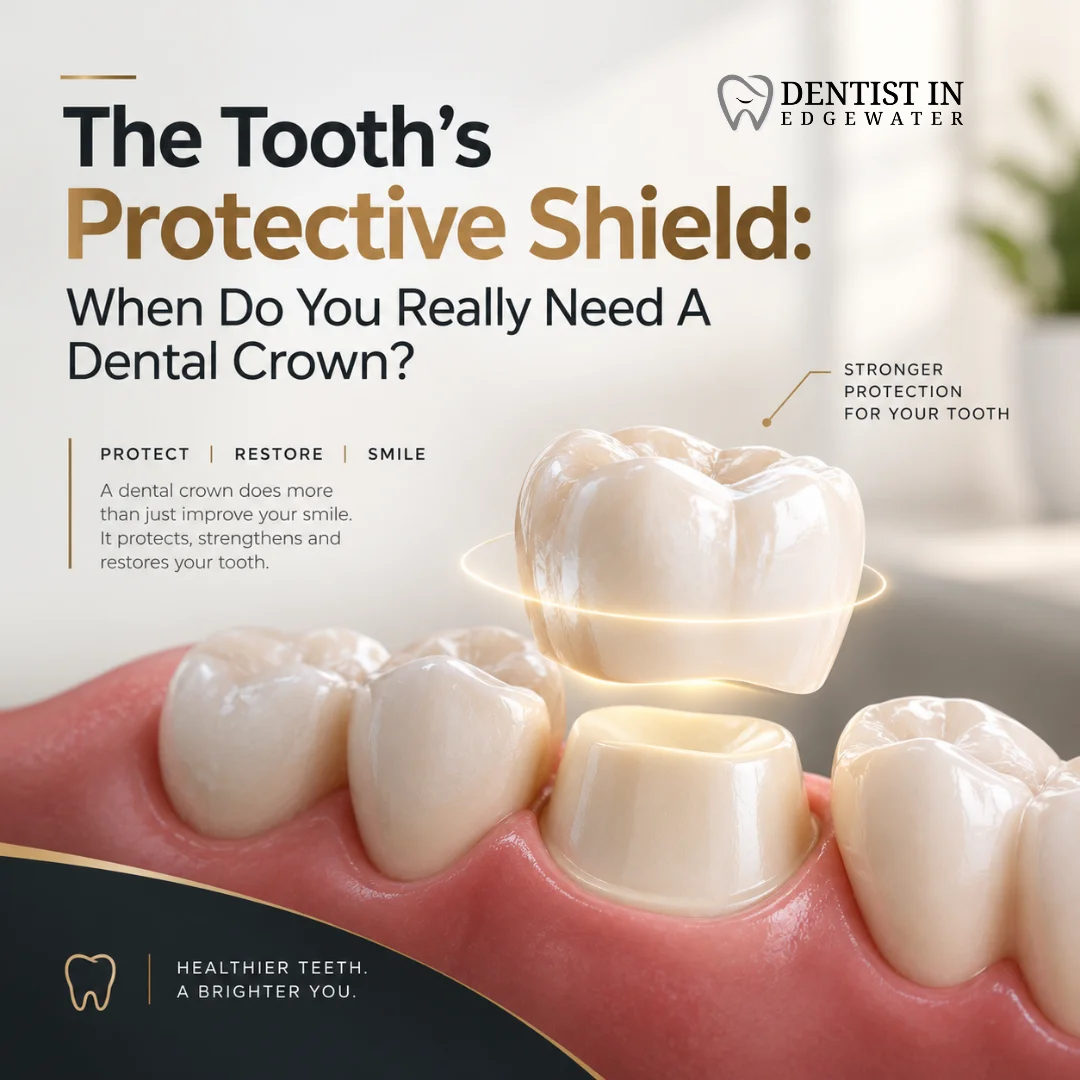
A dental crown is a cap placed over a damaged tooth. It restores its shape, size, and strength. Crowns protect the tooth from further harm.
You might need a dental crown if your tooth has severe decay or cracks. If you have had root canal treatment, a crown will help protect the treated area. It can also be used to support large fillings when not much of the original tooth remains.
A well-made dental crown can last between 5 to 15 years or more with proper care. Good oral hygiene helps extend its life; brushing and flossing are key.
Getting fitted for a dental crown usually involves some discomfort but should not be painful thanks to local anesthesia. Afterward, you may feel sensitivity in that area for a few days as it heals; this is normal and should fade away soon.
Tell us a little about what you need — we'll be in touch shortly.
15 Lee Airpark Dr #100, Edgewater, MD 21037,United States

Hi! I'm Tooth fairy! Your AI Assistant Ask me anything