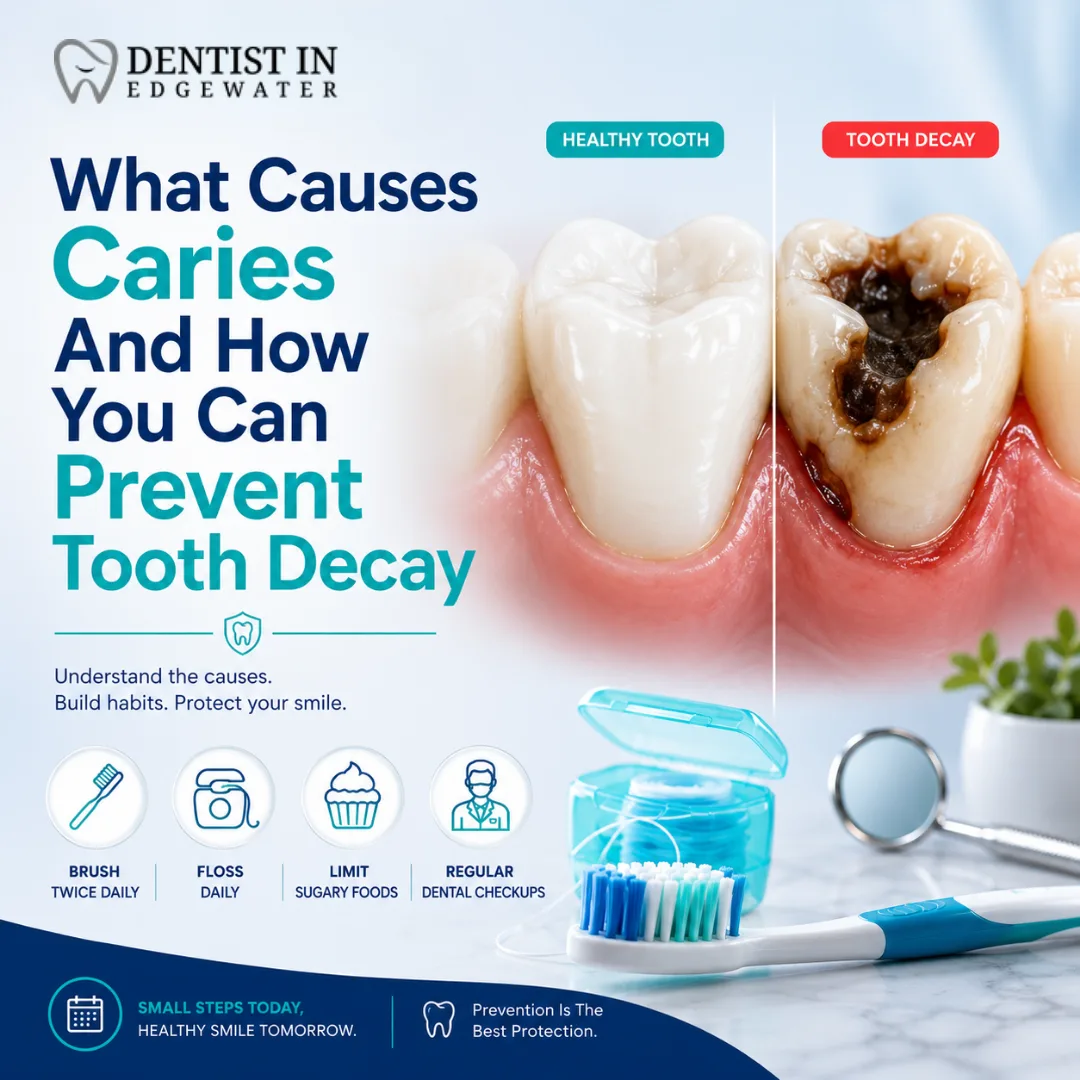
Many people wake with a toothache or see a dark spot on a tooth. They worry about holes and pain from Caries and want clear steps to stop decay. Bacteria feed on sugars and make acid that eats tooth enamel. Learn about the main causes, simple ways to prevent tooth decay, and basic treatment options.
Many people get cavities because bacteria feed on leftover food in the mouth. Certain foods and poor dental care help these germs create acids that harm teeth.
Bacteria live on teeth and gums. They feed on sugars from drinks and snacks and make acid. Plaque forms a sticky film that holds those bacteria close to enamel. Acid eats at enamel and starts cavities and tooth decay.
Brushing and flossing remove plaque and cut bacterial acids. Saliva helps neutralize acid and supports remineralization. Fluoride strengthens enamel and can reverse early decay. Poor nutrition and low fluoride exposure raise risk of cavities.
Sugary and acidic foods can harm teeth. These items feed harmful bacteria in the mouth. As bacteria consume sugar, they produce acid. This acid erodes tooth enamel, leading to cavities. Regular consumption of sugary snacks increases the risk of tooth decay. Soft drinks and candies pose a significant threat due to their high sugar content.
Acidic foods, such as citrus fruits and soda, also damage teeth. Acid weakens enamel over time, making it easier for decay to occur. Frequent snacking on these kinds of food further contributes to plaque buildup as well.
Good oral hygiene is crucial in combating these effects; brushing and flossing help remove particles that cause problems. Staying aware of what you eat plays an important role in maintaining oral health too.
Tooth decay can often be prevented with some simple habits. Regular brushing and flossing help keep harmful bacteria at bay, making a significant difference in oral health.
Proper oral hygiene plays a vital role in preventing cavities and promoting overall oral health. Regular care helps keep bacteria and plaque at bay.
Good oral hygiene forms the foundation for healthy teeth, paving the way for effective strategies to prevent tooth decay.
Proper oral hygiene helps keep teeth healthy, and reducing sugary foods and drinks also plays a vital role. Sugars feed bacteria in the mouth, leading to plaque buildup and cavities. Cutting back on sweet snacks decreases this risk.
Less sugar means fewer chances for decay. It allows saliva to work better at remineralizing teeth. Eating more nutritious options will support dental health as well. A balanced diet with less sugar keeps smiles bright and healthy.
Dentists offer effective treatments for tooth decay. Fluoride treatments can help strengthen teeth, while various fillings restore damaged areas and prevent further issues.
Fluoride treatments effectively help prevent tooth decay. This mineral strengthens tooth enamel and makes it more resistant to acid attacks caused by bacteria and sugary foods. Many dental professionals recommend fluoride for both children and adults.
Research shows that fluoride can reverse early signs of cavities through a process called remineralization. Regular use of fluoride toothpaste or professional treatments enhances oral health. Individuals who follow these recommendations often experience fewer cavities over time, showcasing the power of preventative care in maintaining strong teeth.
Here are common filling types and restorative options.
| Procedure | Description | Typical Lifespan | Pros | Cons | Typical Cost (USD) |
|---|---|---|---|---|---|
| Composite Fillings | Tooth-colored resin used for small to medium cavities. | 5 to 7 years on average. | Matches natural tooth color. | May stain over time. | $90 to $250 per tooth. |
| Amalgam Fillings | Metal alloy used for back teeth where strength matters. | 10 to 15 years commonly. | Very durable for chewing surfaces. | Visibly silver in color. | $100 to $300 per tooth. |
| Glass Ionomer | Bonding material that releases fluoride. | About 5 years in many cases. | Helps reduce future decay. | Less wear resistance than resin. | $100 to $200 per tooth. |
| Ceramic Inlays and Onlays | Porcelain restorations for larger defects. | 10 to 15 years when cared for. | Resists staining and looks natural. | Requires two visits for lab work. | $650 to $1,200 per tooth. |
| Gold Inlays and Onlays | Custom-cast metal restorations for strength. | 20 years or longer often. | Very long lasting and biocompatible. | High cost and metallic look. | $700 to $1,500 per tooth. |
| Dental Crowns | Caps that cover a damaged or weak tooth fully. | 10 to 15 years with proper care. | Restores function and shape well. | Requires removing some tooth structure. | $800 to $2,000 per crown. |
| Root Canal Therapy | Treatment of infected pulp followed by restoration. | High success, many last decades. | Saves a tooth that would otherwise be lost. | Often needs a crown after treatment. | $700 to $1,500 per tooth for treatment; crown extra. |
| Veneers | Thin shells bonded to front teeth for appearance. | 10 to 15 years with routine care. | Great for cosmetic improvement. | Not typically used for active decay alone. | $500 to $2,500 per tooth. |
| Temporary Fillings | Short-term material used between visits. | Days to months, not permanent. | Protects the tooth until final care. | Not durable for long term use. | $20 to $100 per visit. |
| Sealants | Protective coating placed on grooves of molars. | Up to 10 years with maintenance. | Reduces risk of cavities in pits and fissures. | Does not repair existing decay. | $30 to $60 per tooth. |
Caries, or tooth decay, happens when bacteria in the mouth produce acid. This acid can eat away at tooth enamel and cause cavities.
You can prevent tooth decay by brushing your teeth twice a day with fluoride toothpaste. Flossing daily and visiting the dentist regularly also help keep your teeth healthy.
Yes, a diet high in sugar and starches increases the risk of caries. Foods like candy, soda, and chips feed the bacteria that cause tooth decay.
Early signs of tooth decay include sensitivity to hot or cold foods, pain while chewing, and visible spots on teeth. If you notice these signs, visit a dentist promptly for advice.
Tell us a little about what you need — we'll be in touch shortly.
15 Lee Airpark Dr #100, Edgewater, MD 21037,United States
Hi! I'm Tooth fairy! Your AI Assistant Ask me anything